
WELCOME ABOARD
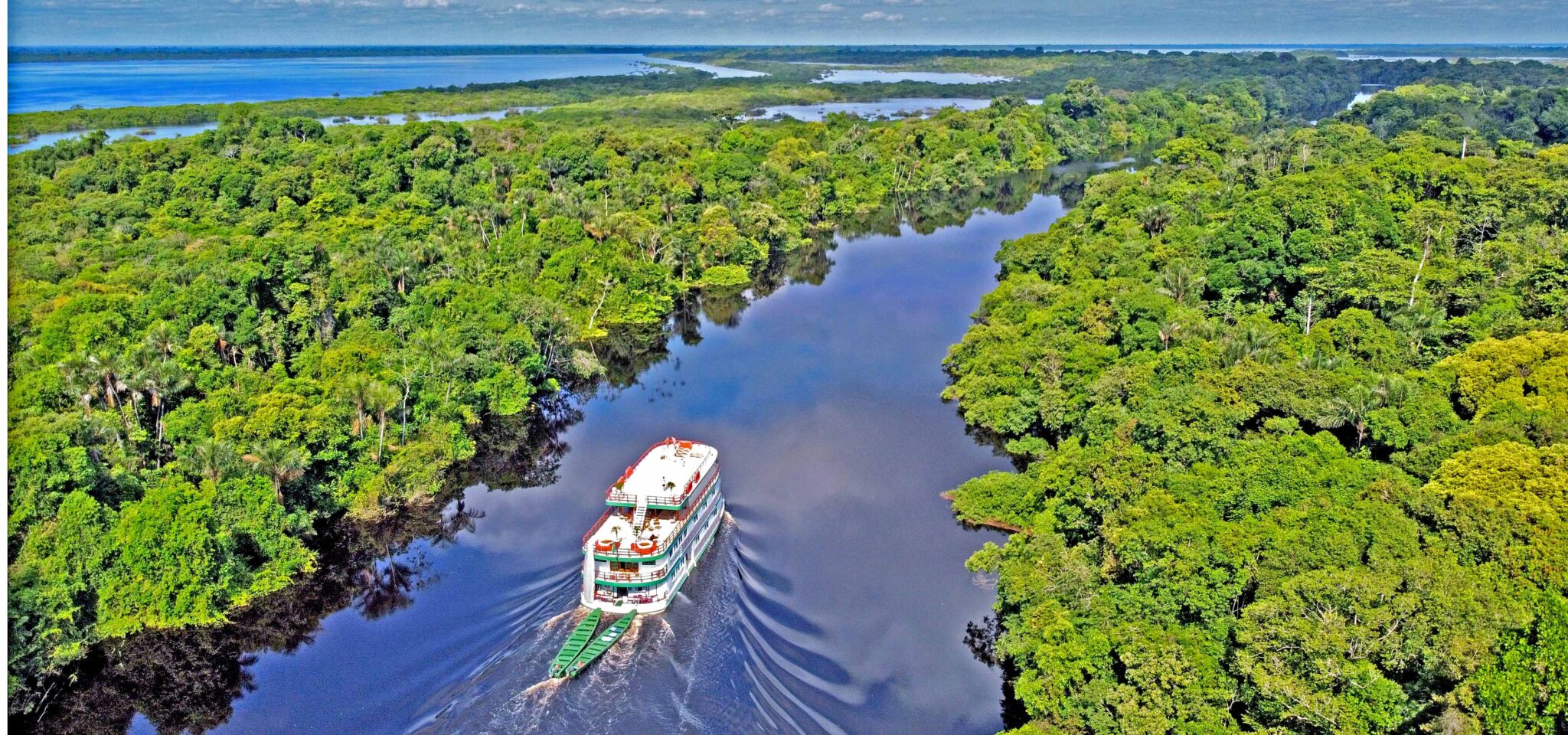
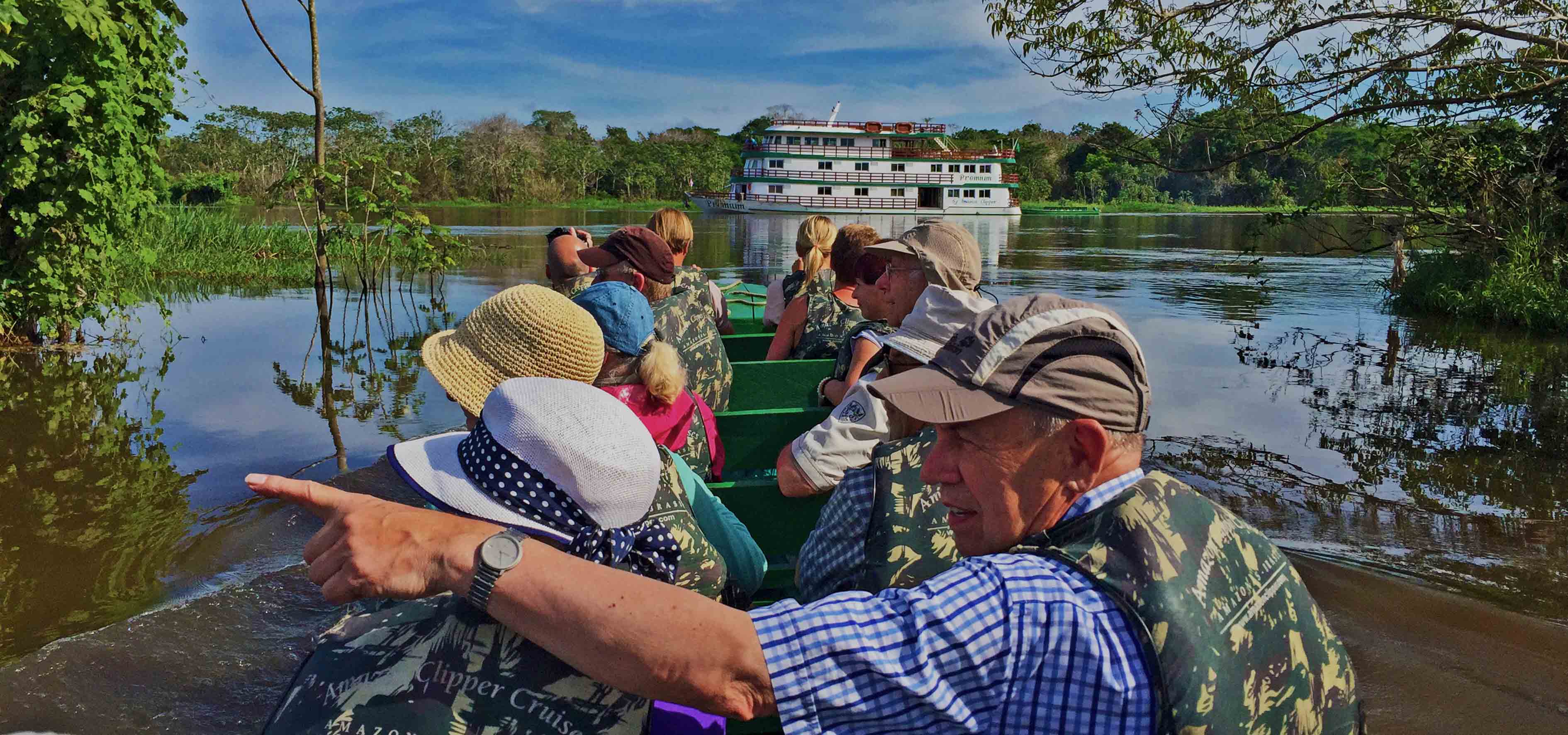
There are several ways to see the wonders of the Amazon: hotels, lodges and boat tours. We consider that the best way to see and enjoy nature, especially on the amazing waterways of the Amazon, is to be agile in this wonderful environment and to be always in the midst of the jungle, especially at dawn and dusk.
Small-ship cruising
That’s the experience that Amazon Clipper Cuises provides.
Our Cruises with regular departures all year round

Amazon River Cruise
3 Days / 2 Nights
River Cruise with an itinerary mainly on the Amazon River.
See full itinerary
Negro River Cruise
4 Days / 3 Nights
River Cruise with an itinerary mainly on the Negro River.
See full itinerary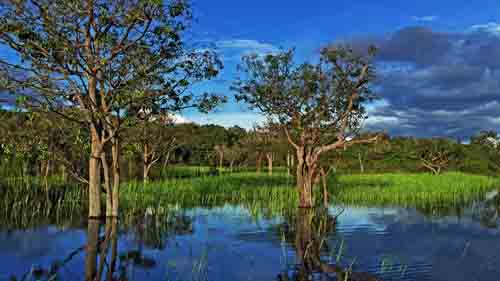
Amazon & Negro River Cruise
6 Days / 5 Nights
River Cruise with an itinarary being a sum of the two previous trips.
See full itinerary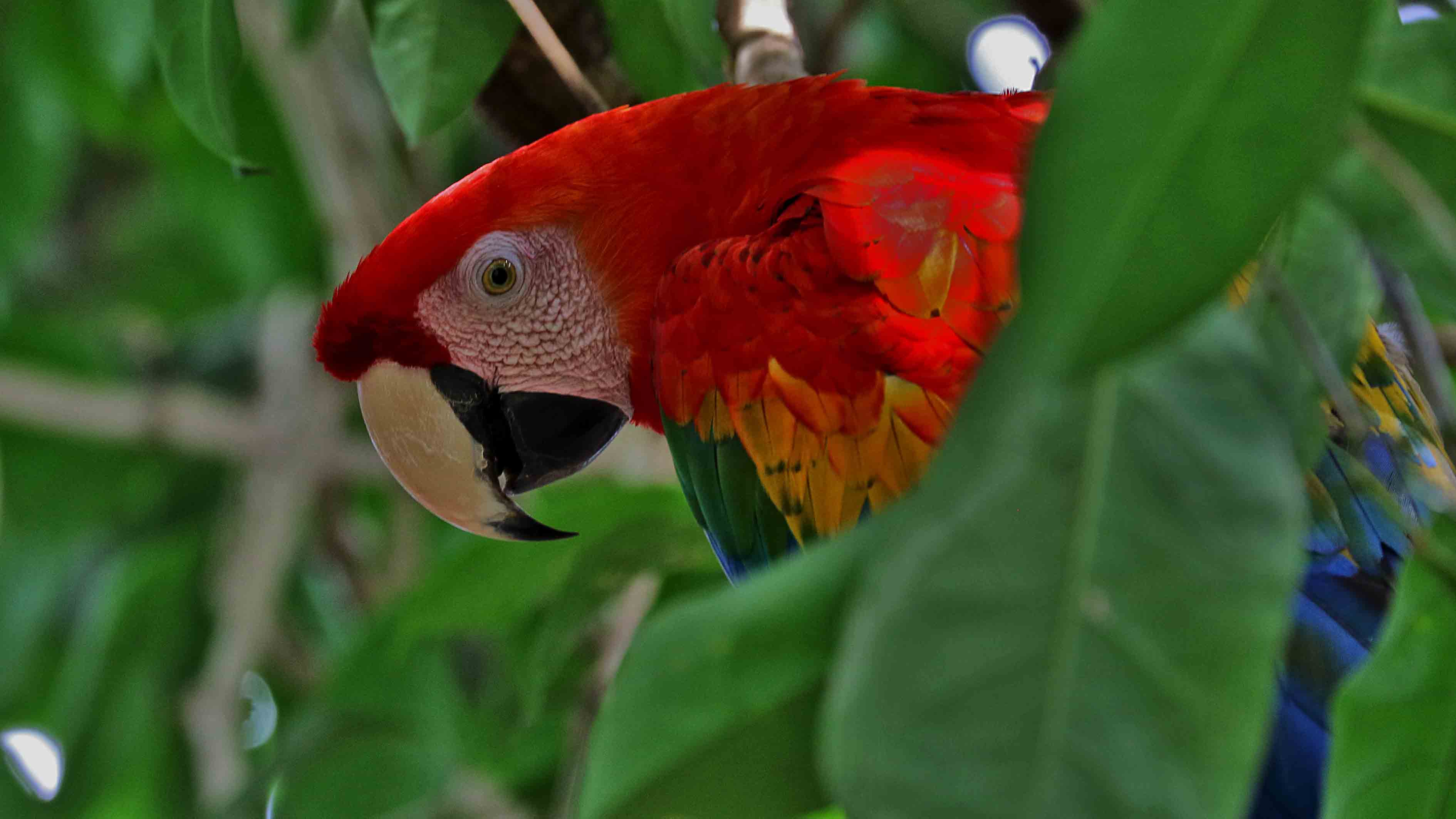
For 35 years Amazon Clipper Cruises has been a leader in operating boat cruises in the Amazon River system departing from Manaus. Being the pioneer in Amazon boat cruises gives us a unique knowledge in logistics and knowledge about locations rarely shown to any other visitors.
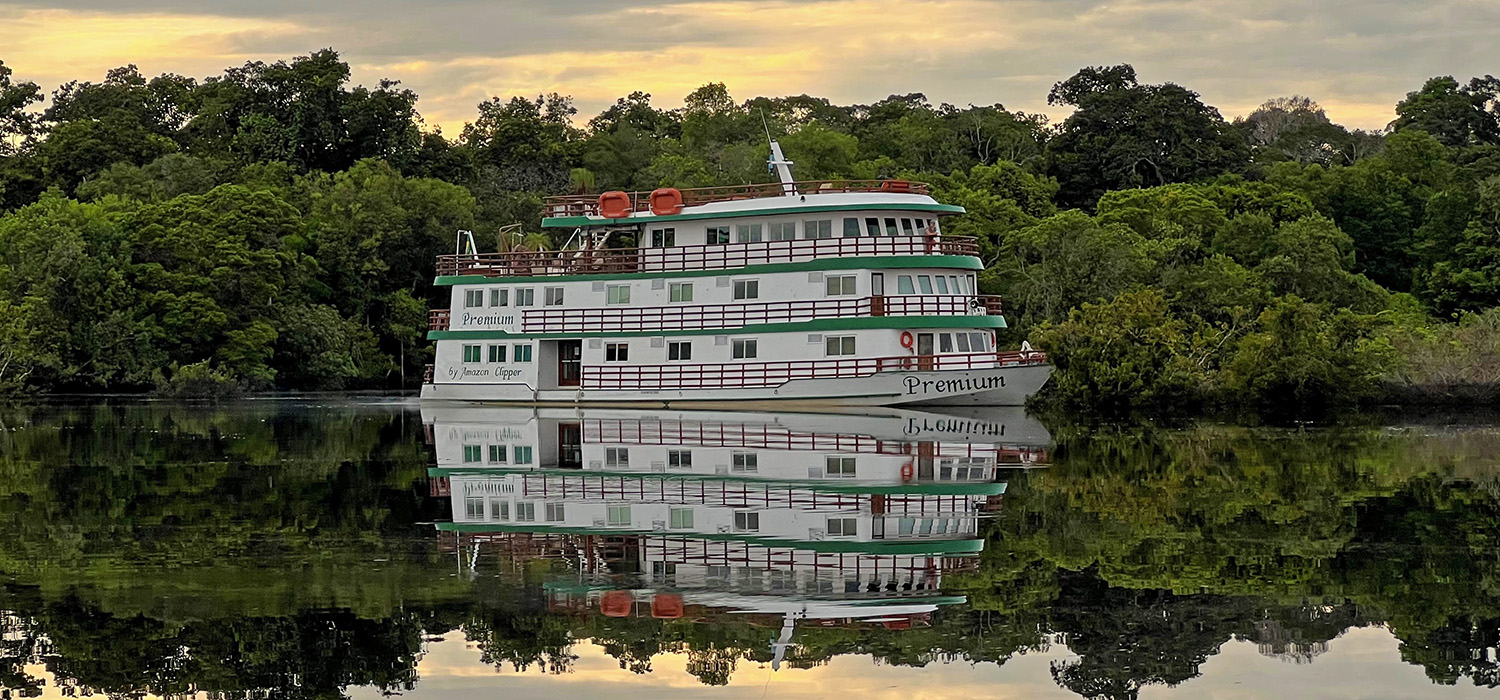
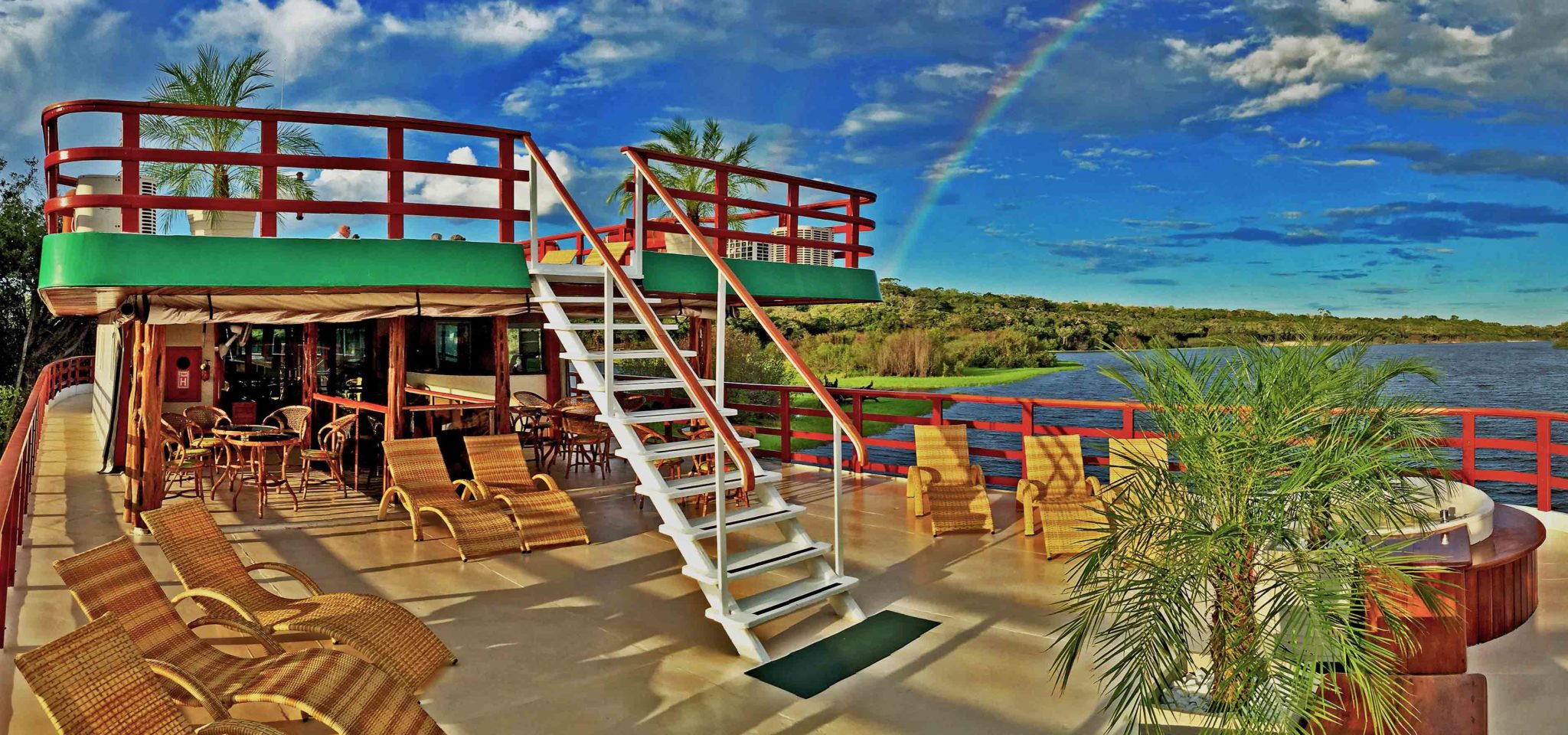
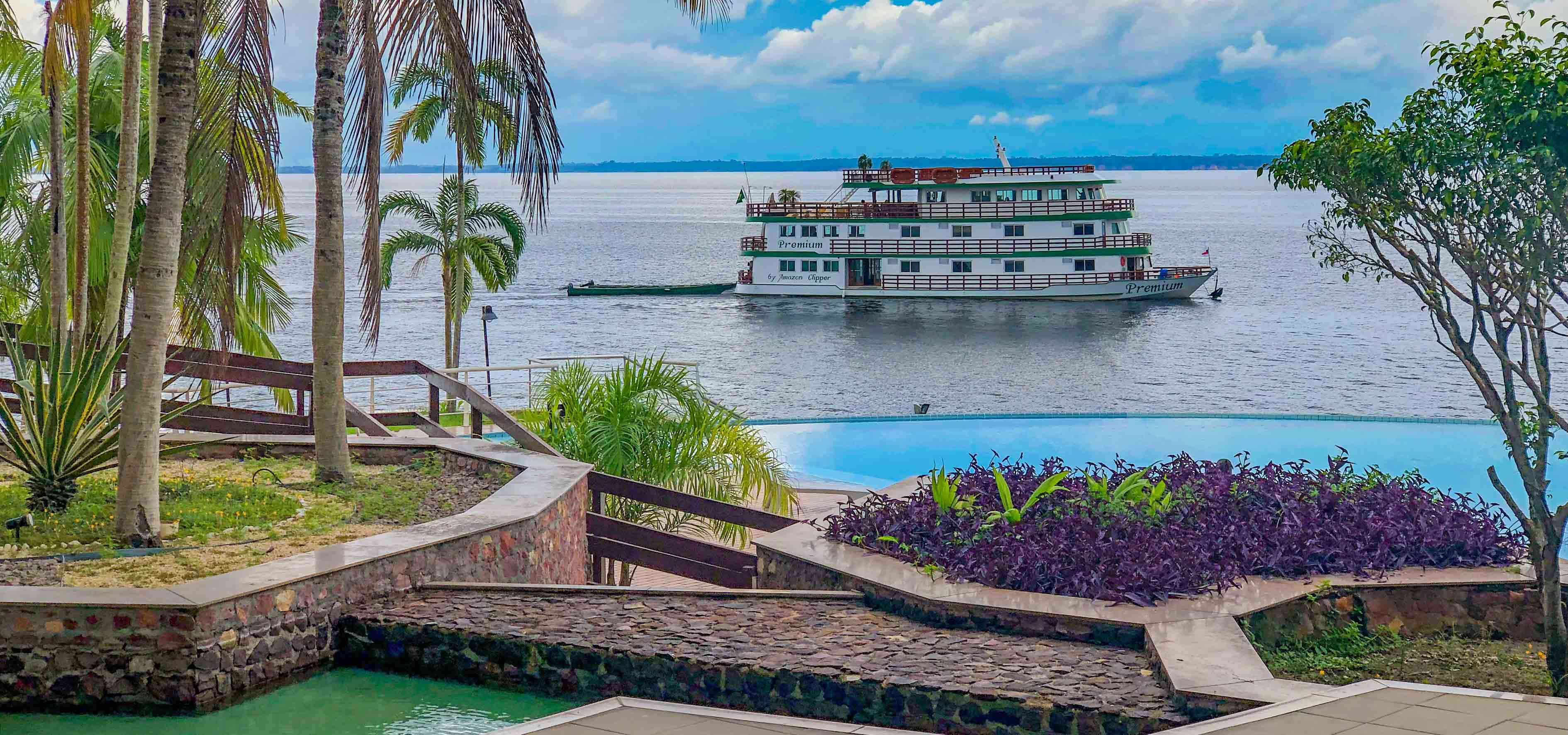
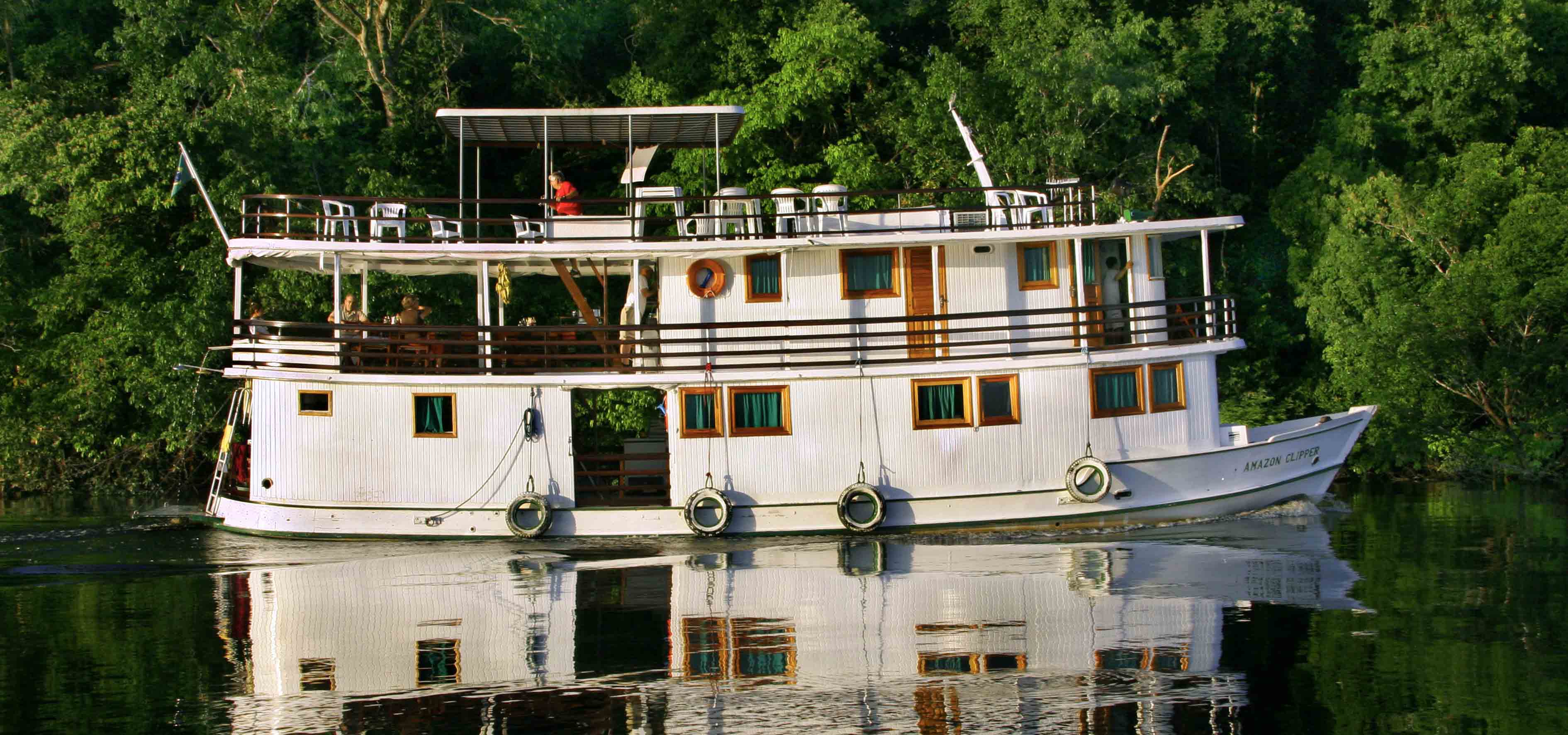
You choose the comfort on board; we offer all cruises in two categories of distinctly Amazonian River boats. The traditional Amazon Clipper with basic comfort and facilities, such as air-conditioned cabins with private toilet, covered dining room with bar and library and a 360° view sundeck.For those who wish the comfort of a luxury ship, we built the Premium, a vessel unique in style that offers “simply the best” small-ship cruising in the Amazon.
Both categories were designed exclusively for cruising on the Amazon River and its tributaries. Using years of experience on other tour boats we made several design innovations to make them as comfortable as possible and still offer a perfect interaction with nature.
OUR FLEET
Typical Amazonian boats with warm and genuine hospitality
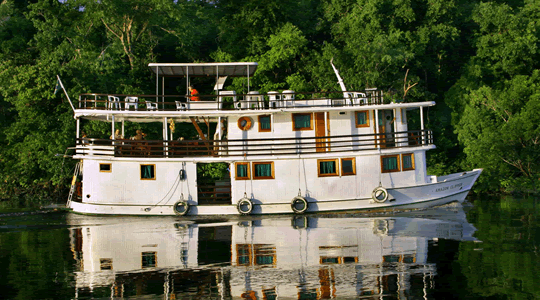
MV Amazon Clipper
Host 16 passengers in 8 cabins
The traditional Amazon Clipper with basic comfort and facilities, such as air-conditioned cabins with private toilet, covered dining room with bar and library and a 360° view sundeck.
See more details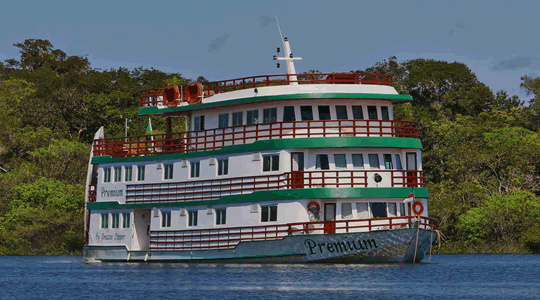
MV Premium
Host 32 passengers in 16 spacious cabins
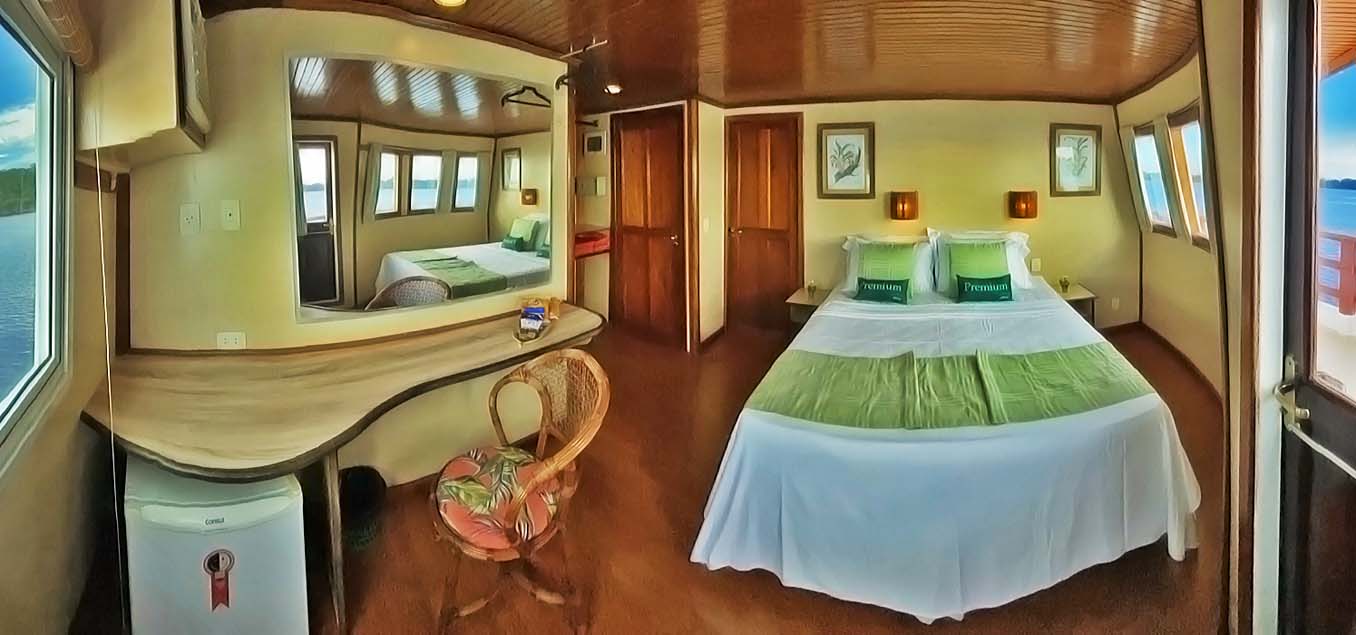
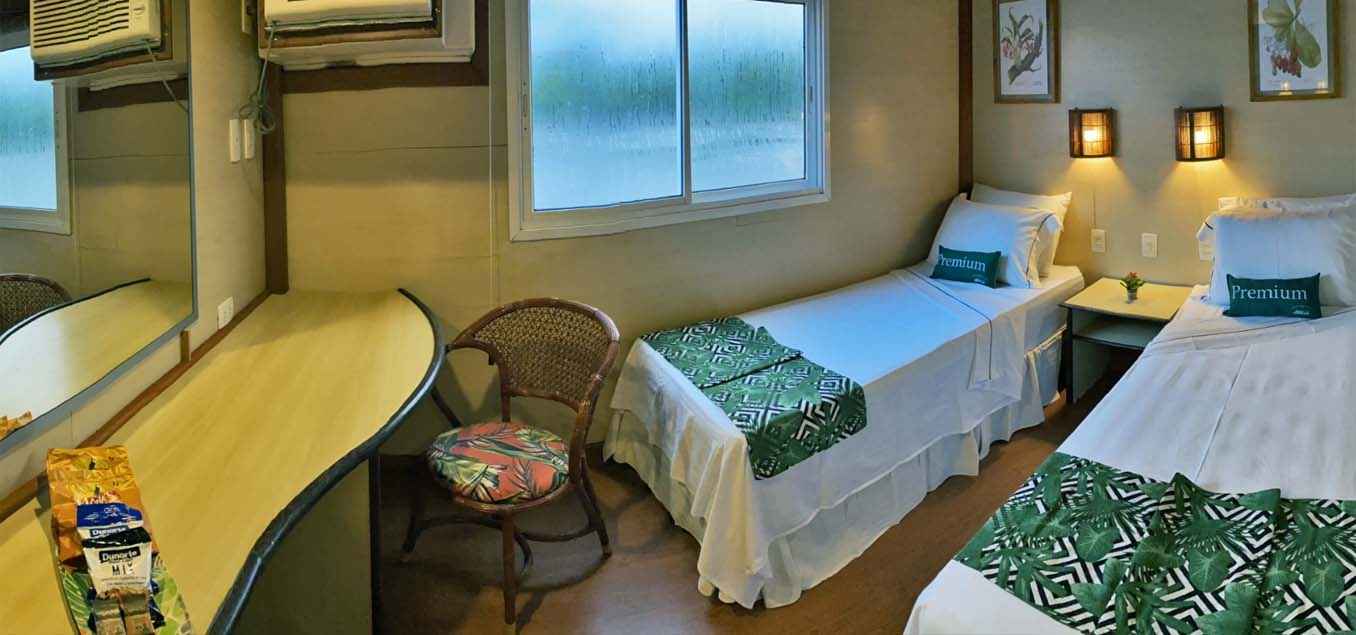
In the Premium category, all passengers are hosted in spacious apartments with two beds side by side or one queen size bed, air conditioning and safety deposit box, all feature a spacious bathroom with hot water.
See more detailsOther small ships we operate in cruises
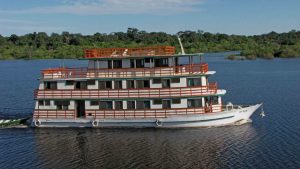
MV Otter
Host 20 passengers in 10 spacious cabins
The MV Otter also host all passengers in spacious apartments with two beds side by side or one queen size bed, air conditioning and safety deposit box, all feature a spacious bathroom with hot water.
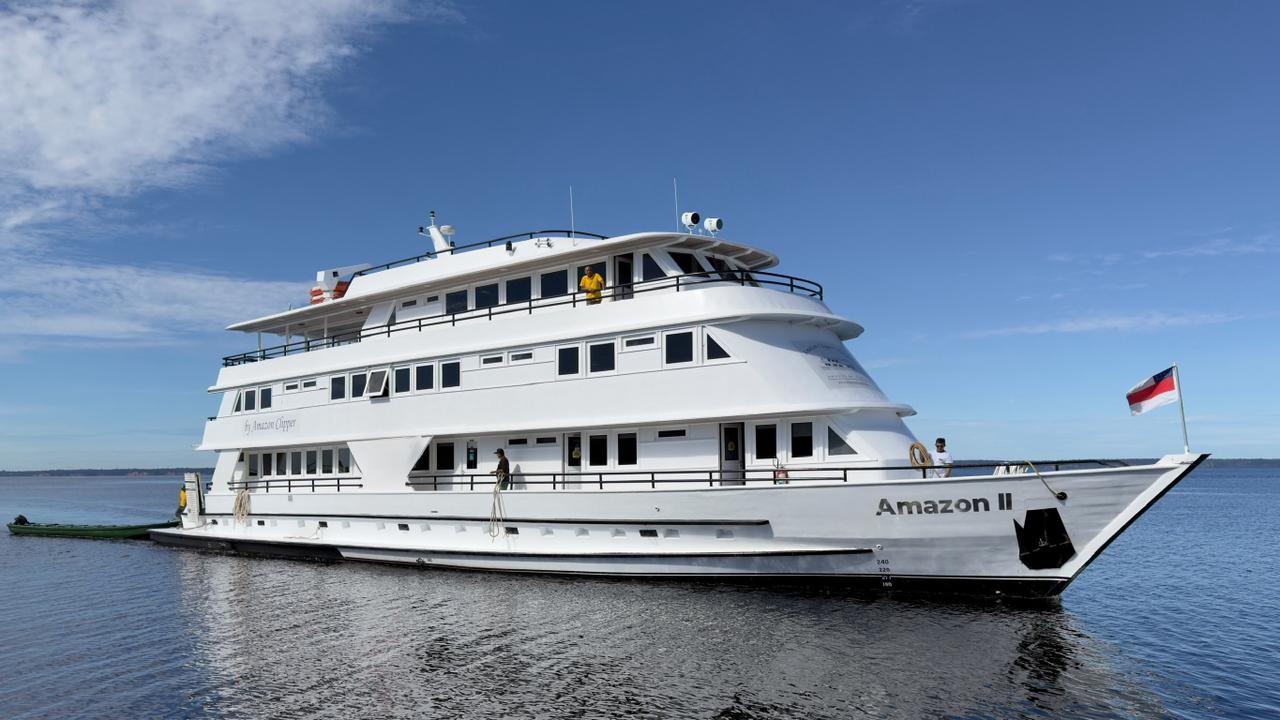
MV Amazon II
Host 24 passengers in 15 spacious cabins
The MV Amazon II also host all passengers in spacious apartments with two beds side by side or one queen size bed, air conditioning and safety deposit box, all feature a spacious bathroom with hot water.